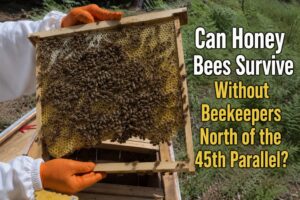
Can Honey Bees Survive Without Beekeepers? North of the 45th Parallel?
Can Honey Bees Survive Without Beekeepers? North of the 45th Parallel?
Many beekeepers in cold climates replace their bees’ honey with sugar for winter and keep feeding them sugar to help them survive winters. I take a different approach.
In this video, I show how I preserve part of the bees’ own surplus honey and gradually give it back to them when needed instead of replacing it with sugar.
In cold winter climates, like the U.S. Northeast, we have long winters and a short beekeeping season. This creates a fundamental challenge:
While a compact winter bee nest is easier for the bees to keep warm, a colony often needs more honey reserves than a compact winter nest can store.
My solution is to freeze some of the bees’ own honey and return it when needed—for example, during late winter, early spring, or a summer dearth when natural forage is unavailable.
This video covers: • Why feral survivor bee colonies are so rare in northern regions • The trade-off between compact winter nests and honey reserves • Why I freeze the bees’ own honey instead of feeding sugar • The beekeeper’s role as a manager of the colony’s natural food resources
My bees are treatment-free RHBA-certified Russian honey bees kept in horizontal Layens hives in central Maine.
If you enjoy thoughtful, treatment-free beekeeping, consider subscribing for more videos from Forest Beehive Apiary.